Preventable Tragedies: Findings on Unintentional Shootings by Children
Every year, hundreds of children in the United States gain access to loaded guns that are unsecured in closets and nightstand drawers, in backpacks and purses, or just left out in the open. With tragic regularity, children pick up these unsecured guns and unintentionally shoot themselves or someone else. Everyone has a role to play in preventing these tragedies. Although unintentional shootings by children are a heartbreaking part of America’s gun violence epidemic, no centralized database tracks how many children gain access to loaded guns and harm themselves or someone else. In 2015, Everytown started such a database, the #NotAnAccident Index,2 by carefully tracking media reports to explore this crisis in depth. This report examines 10 years of data on unintentional shootings by children to uncover solutions to this persistent problem. While the data is deeply distressing, this report outlines the effective steps we can take to keep guns out of children’s hands and save the lives of children, teens, and adults. This includes secure gun storage practices, public awareness campaigns, and laws proven to reduce unintentional injuries and deaths. To learn more about secure firearm storage, visit BeSmartForKids.org.
10/14/20253 min read
Haley’s Story
“The hardest thing I’ve ever had to do in my life.”
Haley Rinehart’s 4-year-old son, Eli, found a loaded gun unsecured at his paternal grandmother’s house on April 5, 2002, and shot and wounded himself in the head. “When he saw it, he thought it was a toy and he was curious about it,” she said. “He wanted to see what he called “missiles,” which were bullets. When he picked it up, the weight caused it to slip in his fingers. His finger hit the trigger and it went off,” Haley said.
The fact that the shooting occurred at a relative’s home added to Haley’s devastation. As a 21-year-old mother of two, Haley “had never thought to question an adult being responsible, because I had always been taught to respect my elders and trust them. It was hard for me to process that adults would be so careless.”
Eli suffered major injuries. He had to have his right eye completely removed and lost his temporal bone and part of the temporal lobe of his brain. He spent months in the hospital. “It impacted me emotionally, mentally, even physically,” Haley said. “I literally went from a happy-go-lucky parent to a helicopter mom overnight.”
The shooting affected every part of Eli’s life, transforming him from a bubbly toddler to a withdrawn child and teenager. “Watching him go through that was the hardest thing I’ve ever had to do in my life. He had to learn how to talk again, he had to learn how to walk again, he had to be re–potty trained,” Haley said. “And he had nightmares. . . . He would wake up screaming and cry for the rest of the night.”
Eli is now an adult. He still has free-floating bone fragments in his brain, and Haley worries that they could cause further damage in the future. “The doctors will tell you it’s a miracle he survived. But we’re not lucky per se, because he’s had to deal with so much because of it,” she said. “But what we can do is we can show people this is what can happen, and we don’t want it to happen to you.”23
Tracking Unintentional Shootings by Children
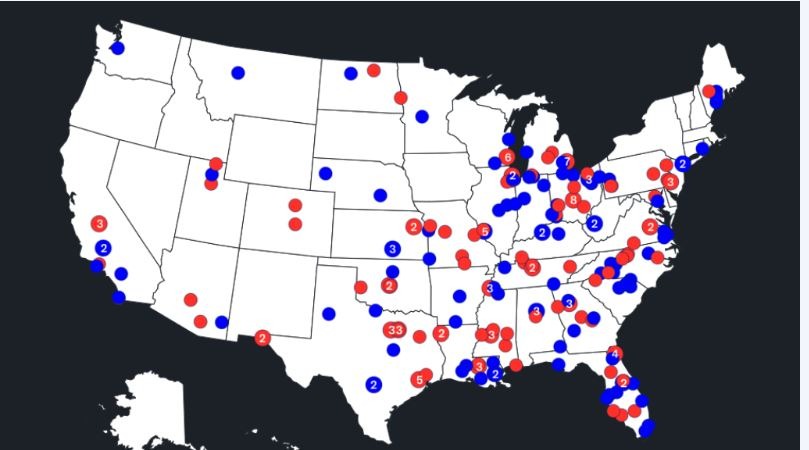
#NotAnAccident Index
In 2015, Everytown for Gun Safety started tracking unintentional shootings by children, collecting information through media reports about incidents in which a child under 18 unintentionally shot themself or someone else.
You can view the data referenced in this report in this data tracker.
Ashlyn’s Story
“He was sleeping at his friend’s house for the holiday. He never came home.”
Ashlyn Carraway’s 13-year-old son, Noah Daigle, was spending a night at his 15-year-old friend’s house during the Christmas holiday break. Ashlyn said that having grown up in a gun-owning family in Louisiana, “Noah was experienced with guns. He had been hunting since he was probably three or four years old, and he was taught safety. I honestly never thought to ask anyone else about guns.”
But a phone call in the middle of that night changed Ashlyn’s life forever. She was told the boys had been video chatting with some of the girls from their class when Noah’s friend held a hunting rifle to Noah’s head as a joke. The boy pulled the trigger, not realizing the safety was not engaged, and Noah was killed instantly. Ashlyn said that even though teenagers are older than small children who find unsecured guns, they don’t always have the judgment to make safe decisions about them—and that is why it is always the adult’s responsibility to securely store guns.
“We shouldn’t just say, ‘Well, my kids are going to know better.’ Your kid may know better, but what about another one?” Ashlyn said. “In Noah’s case, his DNA wasn’t on any of the weapons, so he did know better. But how does that serve him? It didn’t save him that day.”
Ashlyn wants her fellow gun owners to understand that “when it comes down to safety, there’s no other answer than: It should be okay if I ask you about your guns and where you store them,” she explained. “I don’t need serial numbers. We’re not asking for a rundown of what you own. We’re just asking how free are your children with your weapons in your home?”
Ashlyn has struggled with anxiety and grief since Noah’s death. Some days she says she looks at Noah’s picture “a thousand times and I’m fine, and some days you just break down because it wasn’t fair. I didn’t get to see him grow up or I didn’t hear his voice change. Then you try to recall their voice because you don’t want to forget it.”17
My post content
Follow
Acadiana Safe Kids
© 2025. All rights reserved.